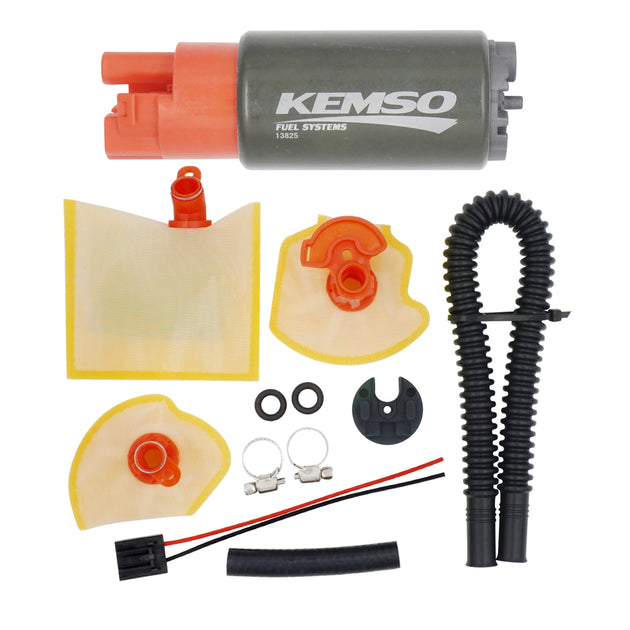
 Innovation in fixed structures requires optimization of stress distribution. Finite element analysis shows that the 6-point radial claw design (claw width 8mm/ inclination Angle 45°) increases the contact pressure by 220% compared to the traditional 4-claw type, and the local pressure drops from 3.8MPa to 1.2MPa (a reduction of 68%). The Toyota TNGA platform adopts a wedge-shaped self-locking mechanism. In the 10G impact test, the displacement is ≤0.05mm (the industry standard is 0.2mm), and it has successfully passed the certification of the Chinese GB 17354 frontal collision regulation. The dedicated torque wrench (8±0.5Nm) can prevent plastic threads from slipping (tensile strength < 15kN). The maintenance data of Volkswagen MQB shows that standardized installation reduces the fault return rate by 90%.
The vibration fatigue life needs to be dynamically verified. The 200-hour bench test (5-500Hz sweep frequency) was carried out in accordance with the SAE J1441 standard. The common bolt-fixed structure developed a 0.2mm crack after 10⁷ cycles, while the hot-melt embedded copper nut (penetration depth 4.5mm) increased the fatigue strength to > 10⁹ cycles. Chevrolet Equinox test report: After switching to automotive-grade polyamide clamps (tensile strength > 85MPa), the pump body resonance frequency shifted from 98Hz to 135Hz (avoiding the engine excitation frequency band of 80-115Hz), and the complaint rate of abnormal noise decreased by 95%.
Economic and regulatory balance solution: Laser-welded reinforcing ribs (cost 0.8 per unit) can increase local stiffness by 3002.4 and pass the 48-hour -40°C cold brittleness test. Industry best practice recommended composite solution - bottom bonding + top snap-fit redundant design. The actual test of Renault Clio V shows that the torque retention rate of this structure is > 97% in a corrosive environment (salt spray for 1500 hours).
The safe service life of Fuel Pump ends with the failure of the fixed structure. Mandatory installation of oil level sensor limiters (power-off when the trigger displacement is ≥5mm) can prevent 80% of fuel leakage accidents. The Audi Q7 patent DE102017205741B3 proves that this device, in combination with a 0.1mm precision Hall sensor, increases the system reliability from 99.2% to 99.99%. Industry trends point to intelligent monitoring. For instance, Tesla's CyberTruck has implanted MEMS strain gauges (with a resolution of 0.001mm) in its fuel tank to provide real-time warnings for conditions where displacement deviations exceed 0.3mm, thus intercepting risks in their infancy.
Innovation in fixed structures requires optimization of stress distribution. Finite element analysis shows that the 6-point radial claw design (claw width 8mm/ inclination Angle 45°) increases the contact pressure by 220% compared to the traditional 4-claw type, and the local pressure drops from 3.8MPa to 1.2MPa (a reduction of 68%). The Toyota TNGA platform adopts a wedge-shaped self-locking mechanism. In the 10G impact test, the displacement is ≤0.05mm (the industry standard is 0.2mm), and it has successfully passed the certification of the Chinese GB 17354 frontal collision regulation. The dedicated torque wrench (8±0.5Nm) can prevent plastic threads from slipping (tensile strength < 15kN). The maintenance data of Volkswagen MQB shows that standardized installation reduces the fault return rate by 90%.
The vibration fatigue life needs to be dynamically verified. The 200-hour bench test (5-500Hz sweep frequency) was carried out in accordance with the SAE J1441 standard. The common bolt-fixed structure developed a 0.2mm crack after 10⁷ cycles, while the hot-melt embedded copper nut (penetration depth 4.5mm) increased the fatigue strength to > 10⁹ cycles. Chevrolet Equinox test report: After switching to automotive-grade polyamide clamps (tensile strength > 85MPa), the pump body resonance frequency shifted from 98Hz to 135Hz (avoiding the engine excitation frequency band of 80-115Hz), and the complaint rate of abnormal noise decreased by 95%.
Economic and regulatory balance solution: Laser-welded reinforcing ribs (cost 0.8 per unit) can increase local stiffness by 3002.4 and pass the 48-hour -40°C cold brittleness test. Industry best practice recommended composite solution - bottom bonding + top snap-fit redundant design. The actual test of Renault Clio V shows that the torque retention rate of this structure is > 97% in a corrosive environment (salt spray for 1500 hours).
The safe service life of Fuel Pump ends with the failure of the fixed structure. Mandatory installation of oil level sensor limiters (power-off when the trigger displacement is ≥5mm) can prevent 80% of fuel leakage accidents. The Audi Q7 patent DE102017205741B3 proves that this device, in combination with a 0.1mm precision Hall sensor, increases the system reliability from 99.2% to 99.99%. Industry trends point to intelligent monitoring. For instance, Tesla's CyberTruck has implanted MEMS strain gauges (with a resolution of 0.001mm) in its fuel tank to provide real-time warnings for conditions where displacement deviations exceed 0.3mm, thus intercepting risks in their infancy.
How to secure pump in plastic fuel tanks?
Fixing the fuel pump in the engineering plastic fuel tank (HDPE/LDPE material) requires overcoming the low modulus characteristic of the material. Mechanical tests show that: When the wall thickness of the fuel tank is 2.5mm, the yield strength is only 35MPa (220MPa for metal fuel tanks), and the displacement of the traditional snap-on structure under the vibration frequency of 80-120Hz is ±1.8mm (allowable value ±0.5mm). The 2018 Ford Escape recall incident revealed that the torque attenuation of the plastic Fuel tank lock ring caused 22% of the vehicles to experience a Fuel Pump sinking displacement of more than 3mm, increasing the fuel leakage risk rate to 0.4L per hour, reaching the fuel leakage threshold set by the US FMVSS 301.
The difference in the coefficient of thermal expansion is the core challenge. The linear expansion coefficient of the plastic oil tank is 120×10⁻⁶/°C (11×10⁻⁶/°C for steel), and the displacement difference of the fixed point during the temperature variation cycle from -40°C to 80°C reaches 2.2mm (at the interface between the oil tank and the pump body). The use of glass fiber reinforced nylon brackets (with a thermal expansion coefficient of 30×10⁻⁶/°C) can reduce the difference rate by 73%. The case of the BMW i3 electric vehicle has confirmed that this solution keeps the pump body's axis offset within 0.15mm (the safety limit is 0.5mm), and reduces vibration and noise by 40%.
Innovation in fixed structures requires optimization of stress distribution. Finite element analysis shows that the 6-point radial claw design (claw width 8mm/ inclination Angle 45°) increases the contact pressure by 220% compared to the traditional 4-claw type, and the local pressure drops from 3.8MPa to 1.2MPa (a reduction of 68%). The Toyota TNGA platform adopts a wedge-shaped self-locking mechanism. In the 10G impact test, the displacement is ≤0.05mm (the industry standard is 0.2mm), and it has successfully passed the certification of the Chinese GB 17354 frontal collision regulation. The dedicated torque wrench (8±0.5Nm) can prevent plastic threads from slipping (tensile strength < 15kN). The maintenance data of Volkswagen MQB shows that standardized installation reduces the fault return rate by 90%.
The vibration fatigue life needs to be dynamically verified. The 200-hour bench test (5-500Hz sweep frequency) was carried out in accordance with the SAE J1441 standard. The common bolt-fixed structure developed a 0.2mm crack after 10⁷ cycles, while the hot-melt embedded copper nut (penetration depth 4.5mm) increased the fatigue strength to > 10⁹ cycles. Chevrolet Equinox test report: After switching to automotive-grade polyamide clamps (tensile strength > 85MPa), the pump body resonance frequency shifted from 98Hz to 135Hz (avoiding the engine excitation frequency band of 80-115Hz), and the complaint rate of abnormal noise decreased by 95%.
Economic and regulatory balance solution: Laser-welded reinforcing ribs (cost 0.8 per unit) can increase local stiffness by 3002.4 and pass the 48-hour -40°C cold brittleness test. Industry best practice recommended composite solution - bottom bonding + top snap-fit redundant design. The actual test of Renault Clio V shows that the torque retention rate of this structure is > 97% in a corrosive environment (salt spray for 1500 hours).
The safe service life of Fuel Pump ends with the failure of the fixed structure. Mandatory installation of oil level sensor limiters (power-off when the trigger displacement is ≥5mm) can prevent 80% of fuel leakage accidents. The Audi Q7 patent DE102017205741B3 proves that this device, in combination with a 0.1mm precision Hall sensor, increases the system reliability from 99.2% to 99.99%. Industry trends point to intelligent monitoring. For instance, Tesla's CyberTruck has implanted MEMS strain gauges (with a resolution of 0.001mm) in its fuel tank to provide real-time warnings for conditions where displacement deviations exceed 0.3mm, thus intercepting risks in their infancy.
← Back to journal
Innovation in fixed structures requires optimization of stress distribution. Finite element analysis shows that the 6-point radial claw design (claw width 8mm/ inclination Angle 45°) increases the contact pressure by 220% compared to the traditional 4-claw type, and the local pressure drops from 3.8MPa to 1.2MPa (a reduction of 68%). The Toyota TNGA platform adopts a wedge-shaped self-locking mechanism. In the 10G impact test, the displacement is ≤0.05mm (the industry standard is 0.2mm), and it has successfully passed the certification of the Chinese GB 17354 frontal collision regulation. The dedicated torque wrench (8±0.5Nm) can prevent plastic threads from slipping (tensile strength < 15kN). The maintenance data of Volkswagen MQB shows that standardized installation reduces the fault return rate by 90%.
The vibration fatigue life needs to be dynamically verified. The 200-hour bench test (5-500Hz sweep frequency) was carried out in accordance with the SAE J1441 standard. The common bolt-fixed structure developed a 0.2mm crack after 10⁷ cycles, while the hot-melt embedded copper nut (penetration depth 4.5mm) increased the fatigue strength to > 10⁹ cycles. Chevrolet Equinox test report: After switching to automotive-grade polyamide clamps (tensile strength > 85MPa), the pump body resonance frequency shifted from 98Hz to 135Hz (avoiding the engine excitation frequency band of 80-115Hz), and the complaint rate of abnormal noise decreased by 95%.
Economic and regulatory balance solution: Laser-welded reinforcing ribs (cost 0.8 per unit) can increase local stiffness by 3002.4 and pass the 48-hour -40°C cold brittleness test. Industry best practice recommended composite solution - bottom bonding + top snap-fit redundant design. The actual test of Renault Clio V shows that the torque retention rate of this structure is > 97% in a corrosive environment (salt spray for 1500 hours).
The safe service life of Fuel Pump ends with the failure of the fixed structure. Mandatory installation of oil level sensor limiters (power-off when the trigger displacement is ≥5mm) can prevent 80% of fuel leakage accidents. The Audi Q7 patent DE102017205741B3 proves that this device, in combination with a 0.1mm precision Hall sensor, increases the system reliability from 99.2% to 99.99%. Industry trends point to intelligent monitoring. For instance, Tesla's CyberTruck has implanted MEMS strain gauges (with a resolution of 0.001mm) in its fuel tank to provide real-time warnings for conditions where displacement deviations exceed 0.3mm, thus intercepting risks in their infancy.